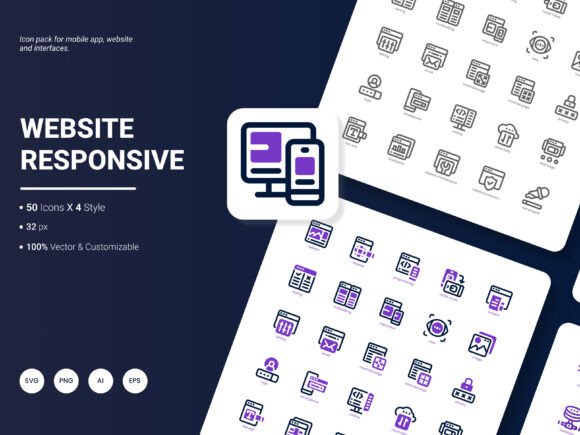
Integrating Website Responsive Icon Pack into Your Creative Workflow
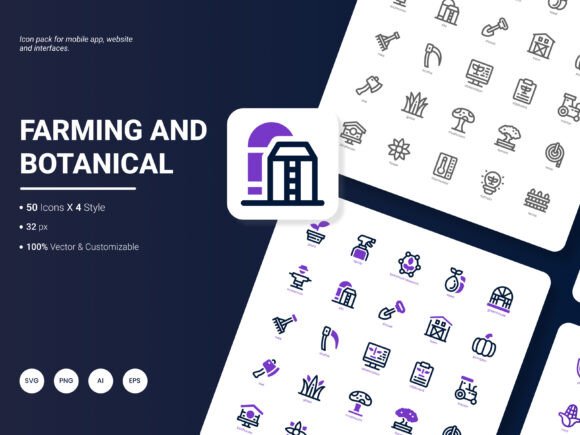
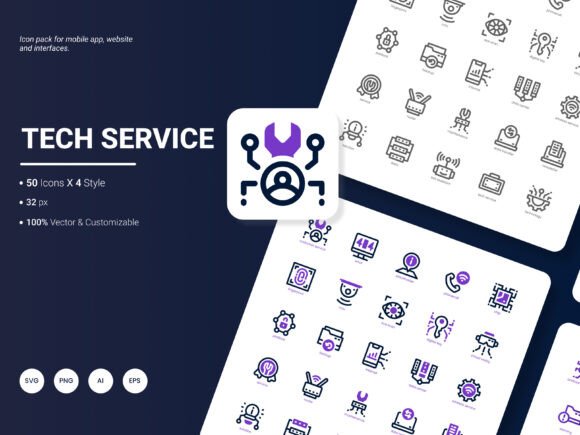
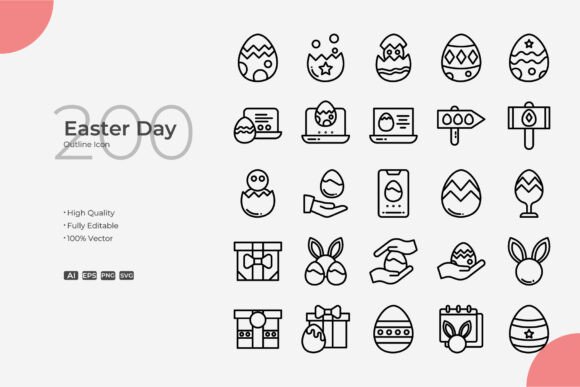
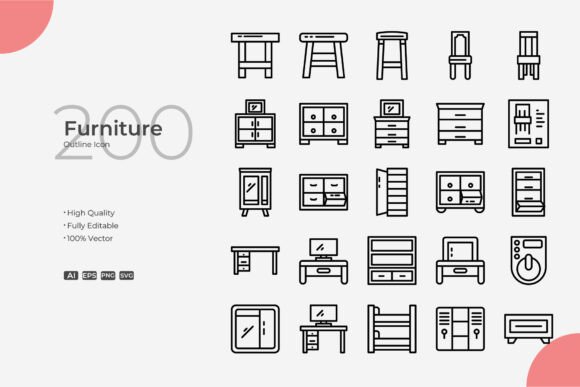
A design project, whether it’s a website, an app, or a presentation, is a process. It moves from conception to planning, through execution, and finally to refinement and maintenance. Within this workflow, the assets you choose act not just as decorative elements but as functional tools that affect efficiency, consistency, and the final outcome. The Website Responsive Icon Pack, comprising 200 stylish icons, is engineered to be such a tool. Its design and specifications place it directly into the practical stages of a project, offering a ready-made solution that aligns with modern design requirements.
Where the Icon Pack Fits in the Planning and Strategy Phase
Before opening any design software, there’s a crucial stage of planning. You define the project’s scope, its visual language, and the recurring elements needed. This is where the Website Responsive Icon Pack becomes a strategic asset. Knowing you have a set of 200 icons covering popular services and concepts allows you to map out your visual needs early. Instead of later scrambling to find or create icons for 'analytics,' 'social media,' or 'e-commerce,' you can confidently plan their inclusion from the start.
This foresight impacts your entire project timeline. You can allocate time saved from icon creation to other complex tasks. Furthermore, the availability of icons in six formats—AI, EPS, SVG, PNG, PDF, JPG—means you can decide on their technical application during planning. Will your web project require scalable SVG icons for responsive behavior? Is your presentation better suited with high-resolution PNGs? Early format selection ensures compatibility and avoids last-minute file conversion hurdles.
Preparation and Asset Organization
A smooth workflow relies on organized assets. Upon acquiring the Website Responsive Icon Pack, a practical first step is to review the set and categorize icons based on your project’s modules or themes. Since the icons are editable and come in vector formats like AI and EPS, you can also consider slight customizations during this preparatory phase—perhaps adjusting color palettes to match your brand guidelines. Doing this before diving into the core design work establishes a library of ready-to-use components, fostering a more efficient execution phase.
Execution: Integration During Active Design and Development
The core of your workflow is the building stage. Here, the flexibility of the Website Responsive Icon Pack is most apparent. For a website designer, the SVG format is key. These icons can be embedded directly into code, scaling perfectly across all devices without losing quality—a fundamental requirement for responsive web design. For a mobile app designer, the PNG formats at various sizes can be imported into UI mockup tools, ensuring crisp visuals on different screen densities.
The pack’s four styles offer another layer of integration. You might use a minimalist style for a clean analytical report and a more detailed style for an engaging infographic. This allows for visual consistency across different outputs within the same project or brand. The editable nature of the icons means that if a specific detail needs tweaking to fit perfectly with an adjacent design element, you can do so without leaving your primary software, maintaining workflow continuity.
Workflow Examples and Practical Implementation
Consider a freelance web developer building a site for a small business. They have established a color scheme and layout. Instead of searching for disparate icons or attempting to illustrate them, they open the Website Responsive Icon Pack SVG folder. Icons for 'contact,' 'services,' 'blog,' and 'testimonials' are placed directly into the site’s navigation and feature sections. The consistency in style immediately elevates the site’s professionalism. For a marketer creating a quarterly report presentation, the process involves dragging the relevant PNG icons into PowerPoint or Google Slides alongside charts and data, using the icons as visual anchors to make complex information more digestible.
The key observation is that the icon pack removes a repetitive, often time-consuming task from the critical path of execution. It acts as a dependable, high-quality resource that designers and creators can draw from repeatedly, much like a well-organized toolkit.
Beyond the Project: Long-Term Use and Quality Control
A robust asset should serve not just a single project but become part of your long-term creative inventory. The Website Responsive Icon Pack, with its broad coverage of popular topics and editable files, is built for this. After its first use, you can archive the pack and revisit it for future projects, ensuring a consistent visual identity across your work over time. For entrepreneurs or small business owners managing their own brand materials, this creates a sustainable source of professional visuals without recurring costs.
Quality control is inherent in using such a pack. Because all 200 icons are designed with a cohesive, trendy aesthetic, you avoid the visual dissonance that comes from piecing together icons from different sources. This uniformity automatically enhances the perceived quality of your final product—whether it’s a website, an application, or a printed report. It also simplifies the review and refinement phase of your workflow, as there are fewer disparate visual elements to adjust or harmonize.
Interaction with Other Tools and Resources
The Website Responsive Icon Pack does not exist in isolation; it interacts seamlessly with the standard tools of the design and development ecosystem. Vector formats (AI, EPS, SVG) open directly in Adobe Illustrator, Affinity Designer, or code editors. PNG and JPG files are universally compatible with any software from Sketch and Figma to Microsoft Office and Canva. This universal compatibility means the pack slots into virtually any workflow without forcing a change in your preferred tools or platforms.
When combined with template systems, style guides, or component libraries, the icons become even more powerful. You can pre-assign specific icons to recurring UI components in your design system, speeding up the assembly of new pages or features. For teams, having a shared, easily edited icon set like this one reduces miscommunication and ensures all members are using visually aligned assets.
Final Considerations for Smooth Integration
To integrate the Website Responsive Icon Pack most effectively, consider your primary output medium and start with the most suitable format folder. Keep the master vector files (AI/EPS) archived as your source for any future customizations. When using for web projects, leverage the SVG format's native responsiveness by setting its dimensions via CSS rather than fixed attributes. For print materials like reports or infographics, ensure you use the high-resolution PNG or PDF files to guarantee print quality.
Ultimately, this icon pack is a process-oriented resource. It supports the planning stage by providing certainty, accelerates the execution stage through ready-made quality and flexibility, and sustains long-term work through reusability and consistency. By treating it as a core component of your asset library rather than a one-time purchase, you streamline your creative workflow from start to finish.
Looking Forward: Suggestions for Future Updates
Based on its integration into real-world workflows, future updates to the Website Responsive Icon Pack could consider expanding its utility even further. Icon sets covering emerging tech concepts or niche business services would be valuable. Enhancing the pack with a structured, searchable JSON file naming each icon and its intended concept could greatly aid developers integrating them into code-based projects. Additionally, providing the icons in popular color theme variants (like monochrome, duotone, or brand-color-ready) could save even more customization time during the planning and preparation phase. Finally, considering the growth of no-code platforms, export formats or snippets optimized for tools like Webflow or Framer could be a practical enhancement for a wider audience.