Unlocking Creativity: The Versatile World of the Peony Outline Drawing
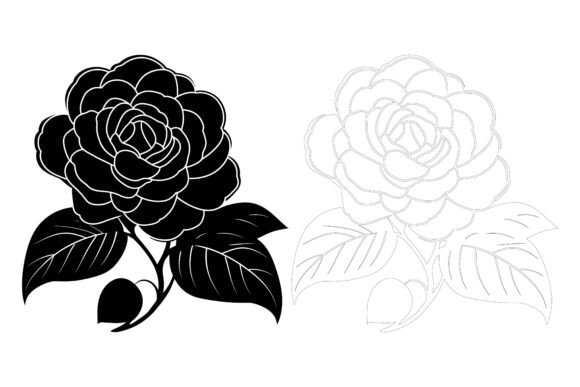
In the toolkit of modern creators, from graphic designers and marketers to content publishers and educators, foundational assets like vector illustrations serve as critical building blocks. An Outline Drawing of a Peony is not merely a static image; it is a flexible, editable starting point that integrates into numerous creative and professional workflows. Its value lies in its simplicity and adaptability, offering a clean, scalable form that can be transformed to fit specific needs across different media and projects. Understanding where and how such an asset fits into your process can significantly enhance efficiency, consistency, and creative output.
Strategic Foundation: The Role of Vector Assets in Creative Planning
Before embarking on any visual project, whether designing a website, creating marketing materials, or developing educational content, establishing a library of reliable core assets is a key planning step. An Outline Drawing of a Peony acts as a prime example of such a foundational resource. In the initial planning and conceptualization phase, having access to professionally designed, editable vector files allows you to explore stylistic directions without committing extensive time to original sketching or asset hunting. This pre-project use saves valuable hours, enabling you to focus on broader layout, color scheme, and message rather than the minutiae of creating base artwork from scratch.
This integration with planning tools is seamless. You might pull the AI EPS file into your design software while storyboarding a brand campaign or sketching a user interface wireframe. Its presence informs decisions about floral motifs, natural aesthetics, or symbolic elements early on, ensuring visual coherence as the project expands. For small business owners or freelancers with limited resources, this preemptive asset acquisition is a practical strategy for maintaining a consistent brand identity across future projects without repeated investment.
Integration into Active Design and Production Workflows
During the active execution of a project, the Outline Drawing of a Peony transitions from a planning asset to a hands-on production element. The special qualities of this AI EPS illustration set—its neat file and layer structure, perfection in details, and compatibility with both Mac and Windows systems—make it directly actionable within standard design environments like Adobe Illustrator or Affinity Designer. The organized layers mean you can isolate specific parts of the drawing, such as individual petals or stems, for selective editing. This is crucial when adapting the illustration for a specific context, like altering colors to match a brand palette or simplifying elements for use in a mobile app icon.
Consider a practical workflow example: a blogger creating a series of themed post graphics. Using the peony outline as a base, they can quickly generate variations—a monochrome version for a minimalist header, a vibrant colored version for a social media post, and a simplified outline for a watermark. Each derivative maintains the same core quality and detail because it originates from the same perfected source file. This process ensures consistency across outputs while allowing for rapid, context-specific modification. The workflow interaction here is between the asset and the creator’s software skills; the asset enables the execution, while the creator’s understanding of their tools determines the final outcome.
Post-Project Adaptability and Long-Term Asset Management
The utility of a well-structured vector asset extends beyond the lifecycle of a single project. After completing a campaign, website launch, or publication, the Outline Drawing of a Peony remains a valuable part of your digital asset library. Its suitability for print, web, symbols, and infographics means it can be repurposed for future initiatives with minimal additional work. For productivity-minded professionals, this long-term usability is a key factor in resource investment. An asset that can be edited, color-modified, and easily adapted according to evolving needs provides ongoing value, reducing the need to purchase new illustrations for every new task.
Effective long-term use depends on proper asset organization. Storing the AI EPS and JPG files within a logically structured resource directory, perhaps categorized by theme (e.g., “Nature,” “Floral,” “Outline Assets”), ensures you can retrieve and deploy them efficiently in future workflows. This organization mirrors the neat structure of the file itself and supports a sustainable creative practice. For entrepreneurs and marketers managing multiple brands or campaigns, such an organized library is indispensable for maintaining speed and quality control.
Practical Implementation Tips for Seamless Integration
To smoothly integrate this type of illustration into your routine, consider a few actionable steps. First, after acquisition, immediately open the AI EPS file in your primary design software to familiarize yourself with its layer structure. Identify how components are grouped; this knowledge will expedite future edits. Second, create a set of standard modifications—perhaps your most-used color schemes or simplified variants—and save these as separate project files. This creates a “quick-access” set derived from the master, optimizing your workflow for recurring needs.
Third, align its use with your project phases. In the planning phase, use the JPG preview for quick mock-ups or client approvals. During production, leverage the full vector file for precise editing. After project completion, archive the original and any modified versions with clear naming conventions (e.g., “Peony_Outline_BrandBlue_v1.ai”) for future retrieval. This tri-phase approach ensures the asset is fully utilized throughout your process.
Compatibility is a given—designed for Mac and Windows users, the files avoid platform-specific hurdles. However, verifying your software version can read the EPS format ensures no last-minute technical delays. Usability is enhanced by the illustration’s inherent clarity; the outline form is intuitively editable, even for those with intermediate design skills, making it accessible for hobbyists, educators, and freelancers who may not be expert illustrators but need professional-grade visuals.
Cross-Platform Application and Collaborative Use
The Outline Drawing of a Peony interacts not only with software but also with people and collaborative workflows. In a team environment, such as a marketing agency or a publishing house, a standardized, high-quality vector asset can be shared among team members to ensure visual uniformity. A designer might modify the colors, a web developer might export it for an SVG web icon, and a print specialist might adjust its stroke weight for a brochure. All these actions stem from the same source, guaranteeing consistency across departments and outputs—a critical factor in brand management and quality control.
Its application across platforms—from print media to digital apps—also means it serves as a unifying visual element in omnichannel campaigns. A florist’s business, for example, could use the same peony outline on their store signage (print), website hero image (web), and mobile app logo (symbols), creating a recognizable and cohesive brand experience. This multiplatform suitability is a direct result of the asset’s technical design: vector scalability and editability.
Driving Outcomes: Efficiency, Consistency, and Creative Freedom
Ultimately, incorporating such a specialized illustration set into your workflow drives tangible outcomes. The primary outcome is efficiency. Time saved on creating base artwork is redirected to conceptual development, client interaction, or polishing final designs. The second is consistency. Using a single, perfected source for multiple derivatives ensures a professional, uniform look across all materials, enhancing brand credibility and audience trust. The third outcome is creative freedom. Paradoxically, starting with a structured outline liberates creativity; instead of being constrained by the inability to draw a perfect peony, you are free to experiment with its application, context, and stylistic variations.
For the adult professional audience spanning creators to business owners, these outcomes align directly with practical goals: delivering quality work on time, building a strong visual identity, and maintaining an adaptable, resource-efficient practice. The Outline Drawing of a Peony, as part of a broader collection of AI EPS assets, is more than an illustration; it is a process-enabler, a quality safeguard, and a versatile tool that integrates thoughtfully into the real-world workflows of planning, execution, and long-term creative management.