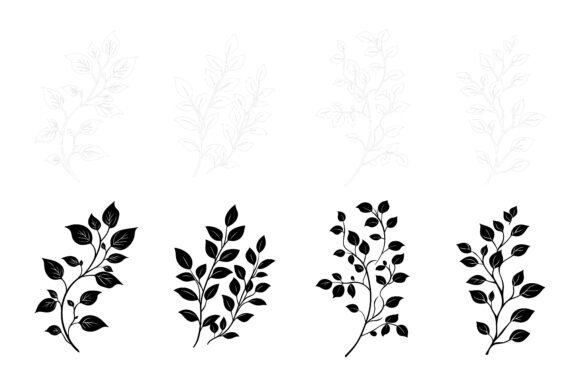
Wild Plant Leaves: A Timeless Source of Inspiration
For creators, the natural world offers an endless reservoir of inspiration. The intricate veins of a fern, the delicate silhouette of a maple leaf, the rugged texture of a sage plant—wild plant leaves capture a beauty that is both structured and organic. Integrating this aesthetic into digital projects, however, presents a common creative hurdle. It's easy to fall into the trap of sourcing generic, low-quality botanical graphics that lack authenticity and flexibility, ultimately undermining your project's potential.
The Pitfall of Inauthentic and Unusable Botanical Graphics
Many designers, marketers, and entrepreneurs seeking a natural touch for their work rush to download free or cheap clipart bundles. This often leads to several significant frustrations. The first is a lack of visual cohesion. Using a mismatched set of leaf illustrations from various sources can make a brand presentation, website, or educational material feel disjointed and amateurish. The style, line weight, and color palette might clash, breaking the harmony you seek to create.
Secondly, file format and structure are frequently overlooked. You might download a JPEG file of a beautiful wild plant leaf, only to find you cannot separate it from its background or change its color to match your brand. This locks you into a single use-case, forcing compromises in your design. For professionals, this rigidity impacts efficiency, requiring time-consuming workarounds or forcing a complete redesign.
What Makes a Superior Wild Plant Leaves Resource
To avoid these pitfalls, you need a resource built for both inspiration and utility. A specialized AI EPS illustration set dedicated to wild plant leaves addresses these core issues directly. The true value lies not just in the subject matter, but in the thoughtful execution of the digital asset itself.
Consider the common mistake of buying a bundle without checking compatibility. A set designed for both Mac and Windows users eliminates a basic technical barrier that can waste precious time. Furthermore, a neatly organized file and layer structure is not a luxury; it's a necessity. When every leaf, stem, and detail is on a separate, logically named layer, you gain immense creative control. You can recompose elements, emphasize certain parts, or animate components without starting from scratch.
The Critical Importance of Detail and Consistency
Another overlooked detail is consistency across the illustration set. If you are creating an infographic about forest ecosystems or a series of blog posts on herbal plants, you need the icons to feel like part of the same family. A high-quality set ensures perfection in details and consistency from one leaf to the next. This builds a professional, trustworthy visual narrative for your audience.
The suitability for multiple applications—print, web, symbols, apps, infographics—also broadens your project’s scope. Using a single, versatile asset library for a brochure, a mobile app icon, and a social media post ensures brand uniformity across all touchpoints. This holistic approach strengthens communication and enhances user satisfaction.
A Practical Approach to Editing and Adaptation
The most empowering feature, however, is true editability. The promise that you can edit it, change colors, and modify the icon easily according to your needs should be tested. Before committing to any digital asset, verify the file format. An AI EPS file, when opened in a vector editing program like Adobe Illustrator, allows you to alter every single stroke and fill. This means you can adapt a set of wild plant leaves to a dark mode website theme, match your corporate green palette exactly, or create a mono-line version for a minimalist project. This flexibility prevents the costly mistake of having to purchase new graphics for every slight variation in your design requirements.
Evaluating Your Needs Before You Buy
So, what should you check before making a decision? First, assess your actual projects. Do you need graphics for high-resolution print materials? Then verify the vector scalability. Are you building a user interface? Check that the icon set includes simple, recognizable symbols suitable for small sizes. Second, think about your own software and skill level. Ensure the primary file format (like AI EPS) is one you or your team can comfortably work with. Finally, look at the provided previews critically. Examine the level of detail, the stylistic coherence between different leaves, and the organization shown in sample layer panels.
A better approach is to view such an illustration set not as a static purchase, but as a dynamic design toolkit. The wild plant leaves become your raw material. You can build complex scenes by combining individual elements, create patterns by repeating a single leaf, or use a detailed illustration as a focal point in a hero image. This shifts your mindset from merely using a graphic to actively designing with it.
Moving Beyond Generic to Authentic Creation
For educators and bloggers, authentic visuals enhance credibility. Using a detailed, editable illustration of a specific medicinal plant leaf, for instance, adds educational value compared to a vague, stylized blob. For entrepreneurs and small business owners in wellness, gardening, or eco-friendly sectors, these visuals directly support brand storytelling, conveying a genuine connection to nature that customers appreciate.
In essence, choosing a well-crafted wild plant leaves illustration collection is a corrective step away from the poor decisions that lead to fragmented, inflexible, and low-impact visuals. It is a practical investment in creative freedom, professional consistency, and long-term utility. By focusing on the technical specs—the file formats, the layer structure, the editability—you secure a resource that serves not just one project, but becomes a staple in your creative arsenal, allowing the timeless inspiration of nature to flourish authentically in your digital work.